



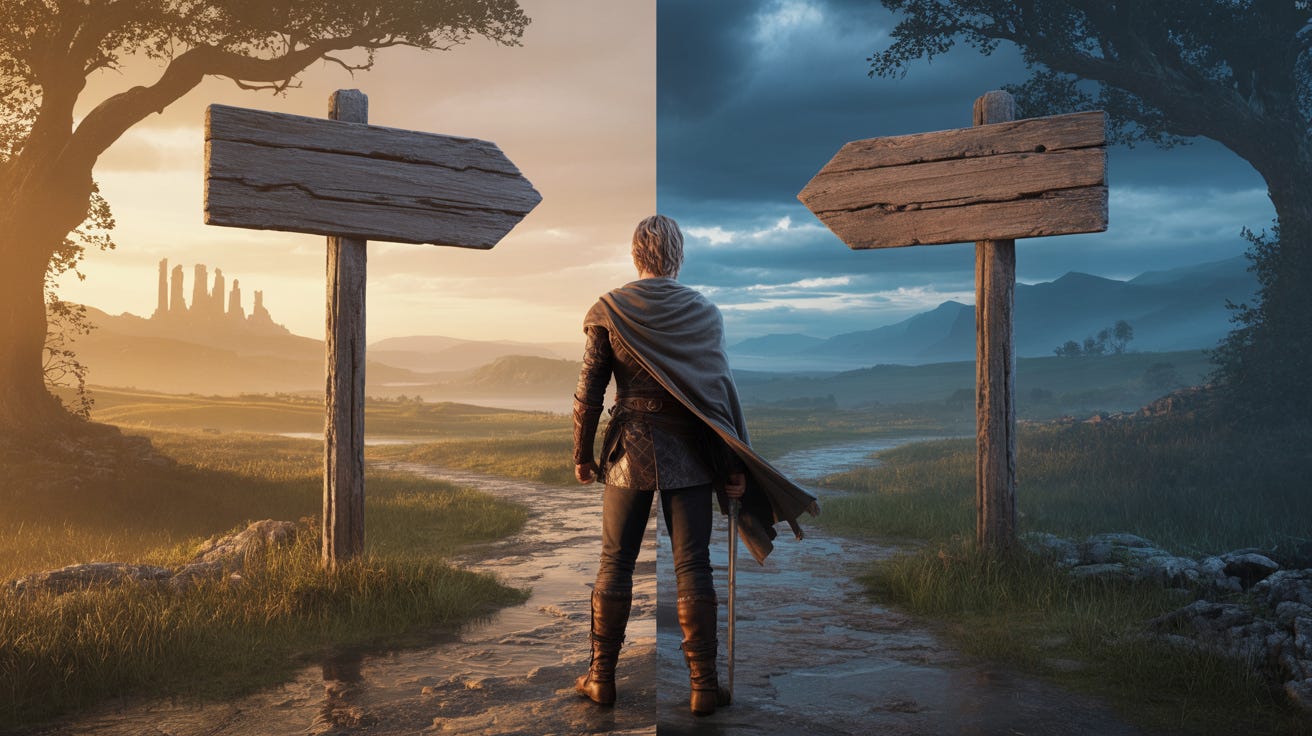
We don’t typically cover video games. However, the upcoming reboot of the medieval fantasy game Fable warrants attention from a philosophical perspective. Once known for its clear moral system of good and evil, the creators have announced that they are now abandoning that framework entirely in favor of subjective perceptions of morality. This seemingly minor design choice says a lot about a broader cultural shift: a growing discomfort with moral clarity and the end of heroes in storytelling.
The original Fable games were not shy about moral clarity. They were literally built around it. In Fable (2004), your choices quietly filled an alignment meter, and the world responded as if morality were a real feature of the universe, not just a social squabble. Save villagers, keep promises, donate at the Temple of Avo, and you stacked up “good” points. Murder innocents, break laws, abuse a spouse, and you accumulated “evil” points.
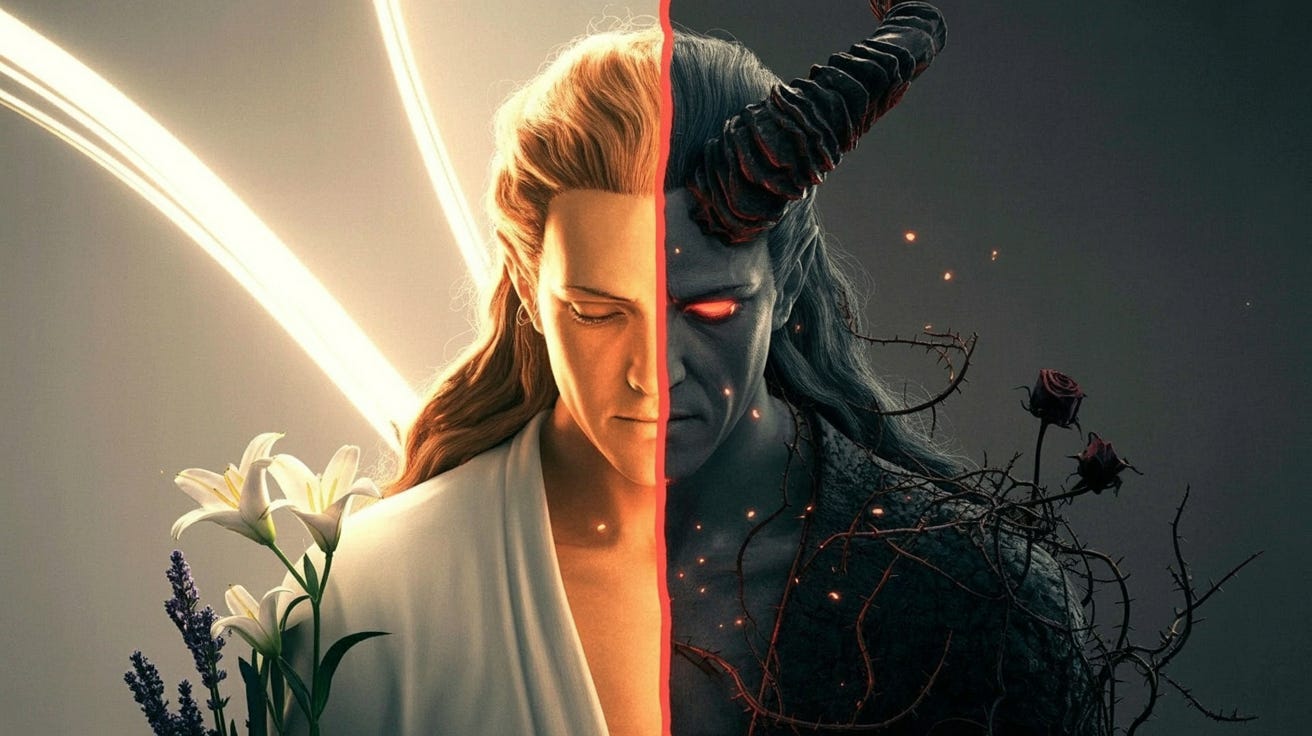
What made Fable different was how shamelessly visible this distinction was. The game turned moral identity into a costume your character had to wear in public. A strongly “good” hero could end up with a halo and radiant effects. A strongly “evil” hero could sprout horns, draw flies, etc. It delivered something modern games increasingly avoid: a world that treats morality as a real, visible, tangible reality.
The new Fable doesn’t care if you’re good or bad
Now the reboot is explicitly stepping away from that cosmic scoreboard. In an official interview, Fable reboot general manager and director Ralph Fulton explains the new direction plainly: “there is no objective good, there is no objective evil.” Instead of a single good-to-evil scale, the reboot anchors morality in witnessed actions and the reputations that spread locally. If someone sees you do something, you can become known for it, and each settlement tracks its own “word cloud” of what you are known for.
The critical twist is that different NPCs interpret the same reputation differently. Fulton’s pitch is that this better reflects real life. As he puts it, it comes down to “people’s subjective opinions” and what they choose to value. The game “will never judge you,” he says, “but the people of Albion will.” That is a real design philosophy shift: from morality as an objective feature of the world to morality as a social negotiation.
Why the creators think this is progress
The stated motivation is not subtle. Fulton argues that the old trilogy was “inextricably linked” to good versus evil, but “morality in video games has moved on.” In other words, the reboot wants to feel contemporary, more psychologically plausible, and more socially nuanced. PC Gamer summarizes Fulton’s reasoning even more directly with his claim that you “couldn’t get everyone in the world to agree” on what is good or evil.
There is also an obvious gameplay upside. A reputation system lets you roleplay multiple identities across a large world and manage information, witnesses, and consequences. As a sandbox, it sounds fun. As a moral statement, it is a sign of the times.
Does morality need us to agree?
Here is where the reboot’s justification starts to wobble. “People disagree about morality” is undeniably true. “Therefore there is no objective good or evil” does not logically follow.
Moral realists have been making this point for decades: the existence of disagreement does not imply the absence of truth. The Stanford Encyclopedia of Philosophy frames moral realism as the view that moral claims “purport to report facts” and that “at least some moral claims actually are true.” Another formulation captures the core in one clean line: “Moral realism is the view that moral principles are stance-independent.” In plain English: what is morally right is not made so by votes, trends, or opinions.
Russ Shafer-Landau puts the realist idea in exactly the way Fulton denies it. Realists, he says, think “there are moral truths that obtain independently of any preferred perspective.” And David Enoch’s famous push is that deliberation itself feels like discovery, not invention. As Richard Joyce summarizes Enoch’s point, when you deliberate, “which decision you make” is something you are trying “to discover, not create.”
The Fable reboot frames moral right and wrong as matters of social perception because people vary in their opinions. But no amount of varying opinions can ever change an objective reality. People vary in their beliefs about medicine, history, and physics too. That does not make them all true, and it certainly doesn’t make reality optional.
When our stories lose villains, society loses its spine
No matter how clever the game creators might consider themselves to be for presenting us with a world where villains might be considered heroes, this is far from the moral breakthrough they pat themselves on the back for accomplishing. Stripped down to its basic elements, the game’s moral engine rests on little more than the psychological truism that people might see things differently.
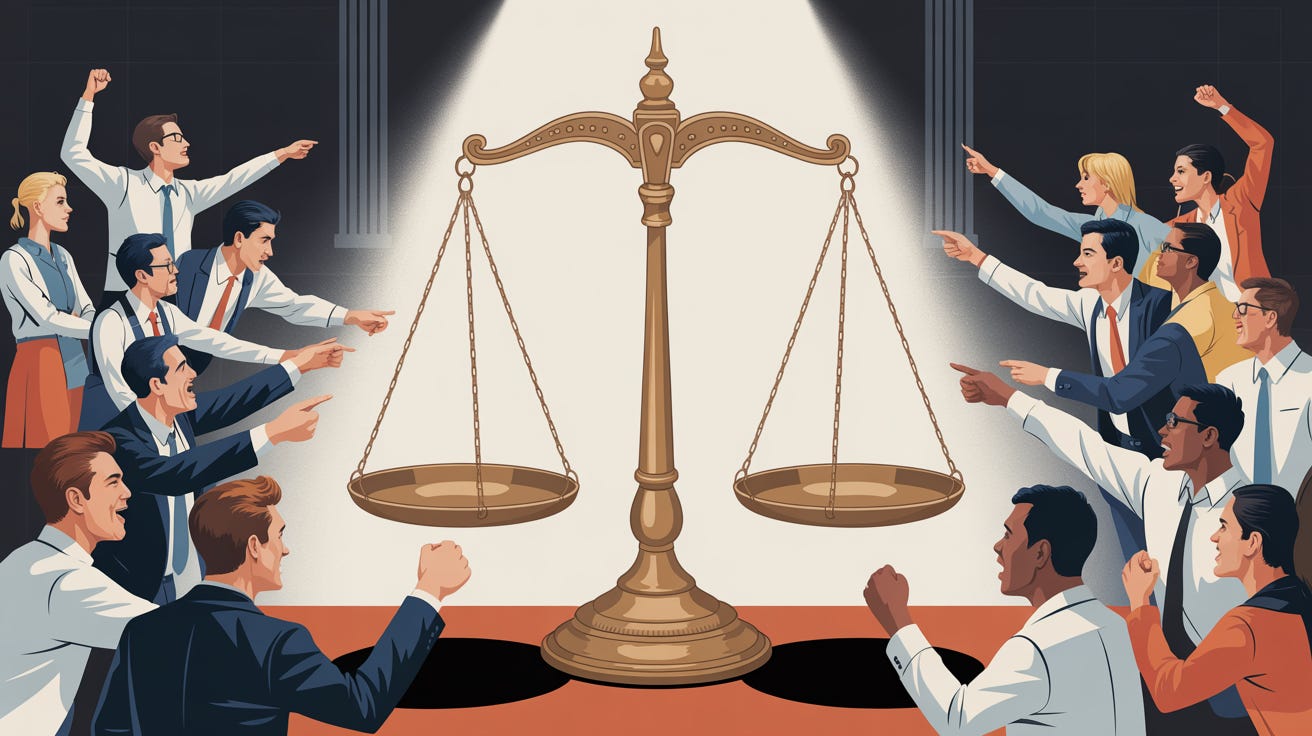
When writers and designers treat morality as nothing but competing perspectives, they might sell this as merely being “nuanced,” while in reality, they are quietly promoting a kind of moral relativism and, eventually, moral indifference.
This matters because functional societies require their moral foundations to be built on more than popularity contests. Laws, rights, and justice assume that some things really are wrong, even when some might find them profitable, fashionable, or justifiable. There is a worrisome aspect to reboots like Fable that smuggle in the claim that good and evil are only social constructs. When the creators of our popular culture explicitly announce that there is no objective good or evil, they are not just changing an obscure storyline detail or some minor gameplay mechanic. They are endorsing a worldview.
The old Fable game was a fairy tale, and fairy tales know something modern storytelling often forgets: we don’t get to draw the line between moral right and wrong. We only decide which side we fall on.
Explore more Popular Philosophy:
Start Philosophy | Definitive Guides | Topics | Today in Philosophy | Podcast
Popular Philosophy publishes definitive guides and essays centered around moral realism, objective truth, Stoicism, ancient philosophy, medieval philosophy, and deeper explorations of the true, the good and the beautiful. Expect carefully researched articles that dissect current event through timeless ideas, for readers who want clear reasoning, primary sources, intellectual honesty and serious philosophy, free from ideological trends and academic fashion.
Subscribe now to support our growing, independent philosophical knowledge base on the timeless questions that shape human life and civilization.