




When people call cruelty evil, justice necessary, or betrayal shameful, they usually mean more than “I dislike this” or “my society disapproves.” They speak as though moral judgment reaches beyond taste, tribe, and habit. Moral realism begins from that ordinary way of talking and asks whether it is actually true to the world.
The issue sounds abstract until the stakes come into focus. If moral realism is right, then calling slavery unjust or torture wrong is an attempt to describe reality accurately. If it is wrong, moral language starts to look more like emotion, social pressure, or useful coordination. That is why the debate has never stayed inside the seminar room for long.
Why the question matters
At its core, moral realism is a claim about what moral judgments are. Geoffrey Sayre-McCord, in his overview of moral realism, argues that moral judgments present themselves as claims about how things stand, not as mere sighs of approval or disgust. Richard Boyd makes a similar case in How to Be a Moral Realist, where he defends the idea that moral claims are truth-apt and that inquiry can, at least sometimes, bring us closer to moral truth.
That does not make moral realism a moral code. It does not tell you whether utilitarianism is correct, whether virtue ethics gives the best account of character, or whether natural law captures the deepest moral structure of human life. It sits one level deeper. It asks what kind of claim we are making when we say that lying is wrong, justice matters, or courage is admirable.
This is why the view matters so much. If morality is answerable to truth, then moral argument is more than rhetoric. We argue because we think some judgments are better than others, some reasons stronger than others, and some verdicts mistaken even when they are fashionable. If moral realism fails, that whole practice looks very different.
What moral realism actually says
A clear statement of moral realism usually has three parts. First, moral judgments are the kind of thing that can be true or false. Second, at least some moral judgments really are true. Third, their truth does not depend only on what any one person, society, or historical period happens to approve. In his shorter essay Moral Realism, Sayre-McCord puts the point plainly. Moral facts, on this view, are what make moral judgments true or false, and those facts are not created by our thinking them so.
That definition is easy to state and easy to misunderstand. Moral realism does not say that moral knowledge is simple. It does not say disagreement is trivial or that ethical reasoning yields neat equations. A philosopher such as W. D. Ross could defend objective morality while also stressing that duties can conflict and that real life is morally tangled. Objectivity does not remove complexity.
What realism rejects is a more radical idea. It rejects the thought that morality is only autobiography disguised as principle. When realists say morality answers to reality, they mean that moral thought can succeed or fail. A culture can praise cruelty and still be wrong. A person can feel morally certain and still be mistaken. A society can congratulate itself and yet deserve condemnation.
A debate older than the label
The phrase moral realism belongs to modern philosophy, but the instinct behind it is much older. One of the most famous early statements of the problem appears in Plato’s Euthyphro. There, Socrates asks whether that which is pious is loved by the gods because it is pious, or whether it is pious because the gods love it. The force of the question lies in what it implies. Does moral truth depend on will, or must even divine will answer to a prior standard?
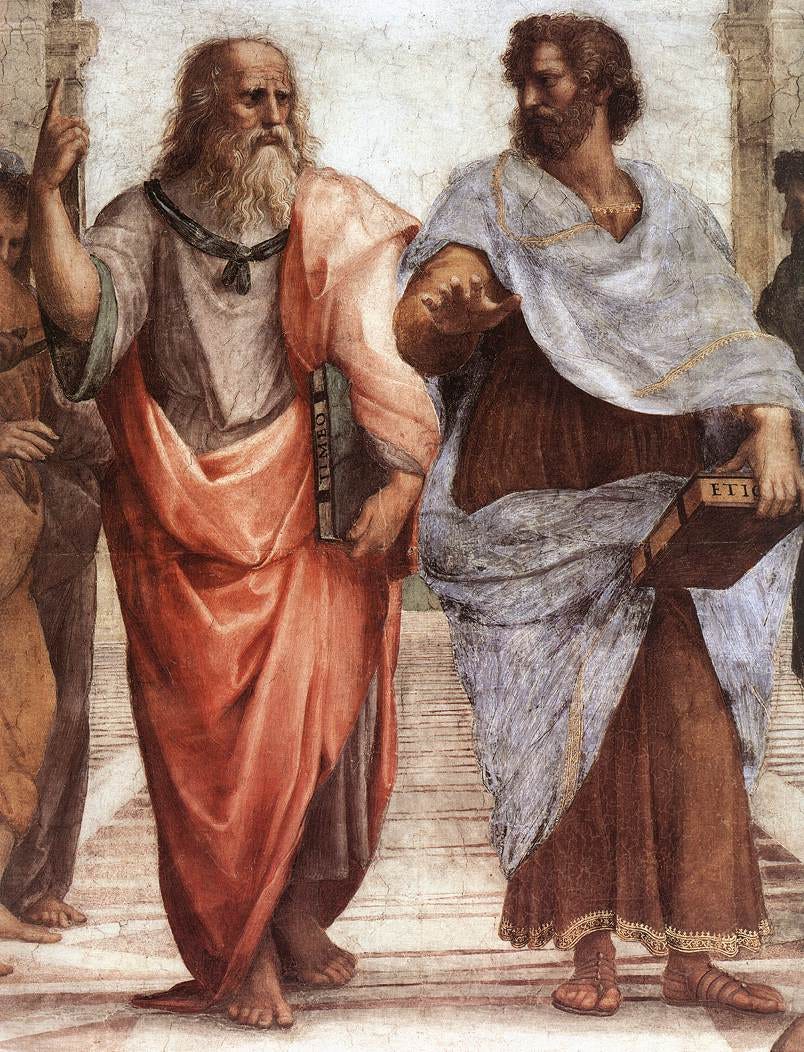
Aristotle gives the issue a different shape in the Nicomachean Ethics. He does not write in the vocabulary of contemporary metaethics, yet he clearly treats ethics as answerable to facts about human nature, rational activity, and flourishing. The good life is not whatever gratifies us in the moment. It is tied to what a human being is, and to the virtues that help a human being live well.
The medieval tradition continues in that objectivist direction. In Aquinas’s discussion of the natural law, moral order is not private sentiment or local fashion. It is intelligible to reason and grounded in the structure of human action. Early modern natural law extends the same ambition. In the Prolegomena to The Law of War and Peace, Hugo Grotius treats justice as something reason can discover in the nature of rational and social creatures, not something power creates by decree.

By the early twentieth century, the debate becomes sharper and more technical. G. E. Moore’s Principia Ethica is crucial because it resists easy attempts to reduce goodness to pleasure, desire, or any other natural property. Moore’s challenge helped define the later split between naturalist and nonnaturalist versions of realism. Yet the larger continuity remains visible from Plato onward. Philosophers keep returning to the same question. How can moral judgment answer to something more than subjective preference?
Why moral realism came under pressure
No serious account of moral realism can ignore the objections. Some of the most powerful critics have not denied the importance of morality, but they have questioned whether morality fits the model of truth and fact at all.
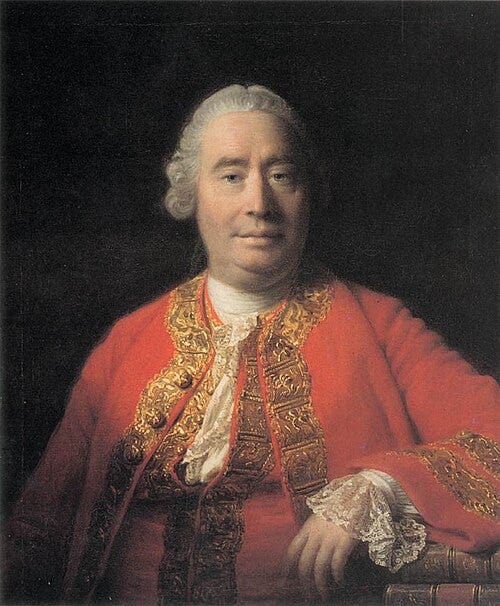
David Hume is central here. In A Treatise of Human Nature, he warns against moving too quickly from statements about what is to statements about what ought to be. He also argues that virtue and vice are not discovered by reason in the same way we discover ordinary matters of fact. That does not by itself refute realism, but in some circles, it places lasting pressure on any theory that treats moral knowledge as straightforward perception of an independent order.
A second challenge comes from noncognitivism. In A. J. Ayer’s Critique of Ethics and Theology, ethical judgments are treated as expressions of feeling rather than statements of fact. To say “murder is wrong,” on this account, is not to describe a moral feature of the world. It is to condemn, to disapprove, or to try to shape another person’s attitude. Moral language still matters, but its function begins to look emotive and persuasive rather than truth-directed.
A third challenge comes from Gilbert Harman’s Ethics and Observation. Harman asks whether moral facts do the same explanatory work that scientific facts do. If someone sees children torturing a cat and judges the act wrong, what explains that judgment? Is it the act’s actual wrongness, or the observer’s upbringing, psychology, and sensibility? If moral facts do no explanatory work, the realist seems to face a serious epistemic problem.
Another prominent skeptic of moral realism is J. L. Mackie. His error theory concedes something important to the realist. Ordinary moral discourse does seem to aim at objectivity. But Mackie argues that there are no objective moral values for that discourse to latch onto. To some, that combination makes the challenge unusually powerful. It grants the realist’s description of moral language, then denies that reality contains anything corresponding to it.
How realists answer back
Realists usually begin with a simple point. Disagreement does not prove unreality. People disagree about history, economics, medicine, and physics. That does not show there is no truth in those domains. It shows that inquiry can be difficult, bias can distort judgment, and evidence can be hard to sort. Moral disagreement may run deep, but depth alone does not show that morality is projection.
They also point to the shape of ordinary moral life. People do not usually treat ethical argument as a clash of bare feelings. They distinguish serious reasons from flimsy excuses. They accuse themselves of prejudice. They revise their views in light of counterexamples, hypocrisy, and evidence of harm. They think some moral outlooks are corrupted by self-interest, ideology, cruelty, or ignorance. That practice makes more sense if moral judgment is trying to get something right. It is one reason Sayre-McCord treats realism as such a natural starting point in both Realism, Moral and Moral Realism.
The metaphysical objection receives two broad replies. Naturalist realists argue that moral facts need not be spooky additions to the universe. They may be facts about flourishing, harm, human needs, reasons, or social practices, understood with enough precision and discipline. Nonnaturalist realists agree that moral properties cannot be reduced in this way, yet deny that irreducibility makes them unreal. On either view, the realist insists that moral truth does not have to be magical to be genuine.
Harman’s explanatory challenge also provoked a more direct answer. Nicholas Sturgeon, as summarized in the MIT handout on Moral Explanations, argues that moral facts can matter to explanation after all. Cruelty, injustice, and depravity may help explain actions, institutions, and historical outcomes. Boyd’s broader realist program pushes in the same direction, treating moral inquiry as fallible but still genuinely truth-seeking.
Naturalist and nonnaturalist moral realism
A great deal of modern debate turns on the difference between naturalist and nonnaturalist realism. A naturalist moral realist says that moral facts belong within the natural world, even if they are difficult to analyze and difficult to know. Boyd is often read in this vein. His view treats moral inquiry as continuous with other forms of serious investigation, rather than as a mysterious sixth sense.
A nonnaturalist moral realist agrees that moral truths are objective but denies that they can be reduced to the kinds of properties described by the natural sciences. Moore remains the classic reference point here. On this picture, goodness is not identical with pleasure, desire-satisfaction, or any other ordinary natural property, even when those things often overlap in lived experience. Ross belongs broadly in this camp as well, since he treats duties as objective features of situations rather than as products of convention.
The disagreement between these camps is real, but it should not obscure what they share. Both reject the idea that a moral judgment becomes true because a person endorses it, a culture normalizes it, or a state enforces it. If some moral claims are true, they are true because reality contains standards that human judgment can match or miss. The dispute is over what sort of reality that is.
Why moral realism still matters
The clearest short definition still works best. Moral realism is the view that some moral claims are true, and that their truth does not depend simply on our making or endorsing them. It says morality is answerable to truth.
That idea matters far beyond professional philosophy. It shapes how we think about injustice, reform, atrocity, repentance, and self-criticism. If realism is right, then cruelty can be condemned even when it is admired. Justice can be demanded even when it is costly. A society can celebrate its own conduct and still deserve moral blame. A person can feel righteous and still be wrong.
This is why the argument refuses to disappear. The real alternative to moral realism is not sober common sense. It is some form of the claim that morality is, in the end, expression, construction, convention, or useful fiction. Those positions have force, and the best of them are philosophically serious. But anyone who wants to preserve the distinction between being right and merely feeling certain will keep returning to moral realism. The question remains hard because it reaches into the deepest structure of moral life. What are we doing when we judge, condemn, praise, or forgive? And are we discovering anything beyond ourselves?
References
Sayre-McCord, Geoffrey. “Realism, Moral.” In The International Encyclopedia of Ethics. Blackwell, 2013.
Boyd, Richard. “How to Be a Moral Realist.”
Plato. Euthyphro.
Aristotle. Nicomachean Ethics.
Aquinas, Thomas. “The natural law.” Summa Theologiae, I-II, q. 94.
Grotius, Hugo. The Law of War and Peace.
Moore, G. E. Principia Ethica.
Hume, David. A Treatise of Human Nature.
Ayer, A. J. “Critique of Ethics and Theology.” In Language, Truth and Logic.
Harman, Gilbert. “Ethics and Observation.” In Ethical Theory: An Anthology, edited by Russ Shafer-Landau.
Sayre-McCord, Geoffrey. Moral Realism.
“24.231 Ethics Handout 6: Sturgeon, ‘Moral Explanations’.”
Explore more Popular Philosophy:
Start Philosophy | Definitive Guides | Topics | Today in Philosophy | Podcast
Popular Philosophy publishes definitive guides and essays centered around moral realism, objective truth, Stoicism, ancient philosophy, medieval philosophy, and deeper explorations of the true, the good and the beautiful. Expect carefully researched articles that dissect current event through timeless ideas, for readers who want clear reasoning, primary sources, intellectual honesty and serious philosophy, free from ideological trends and academic fashion.
Subscribe now to support our growing, independent philosophical knowledge base on the timeless questions that shape human life and civilization.